Trump’s Venezuela Oil Deal Puts 65 Billion Barrels at the Heart of US Energy Strategy
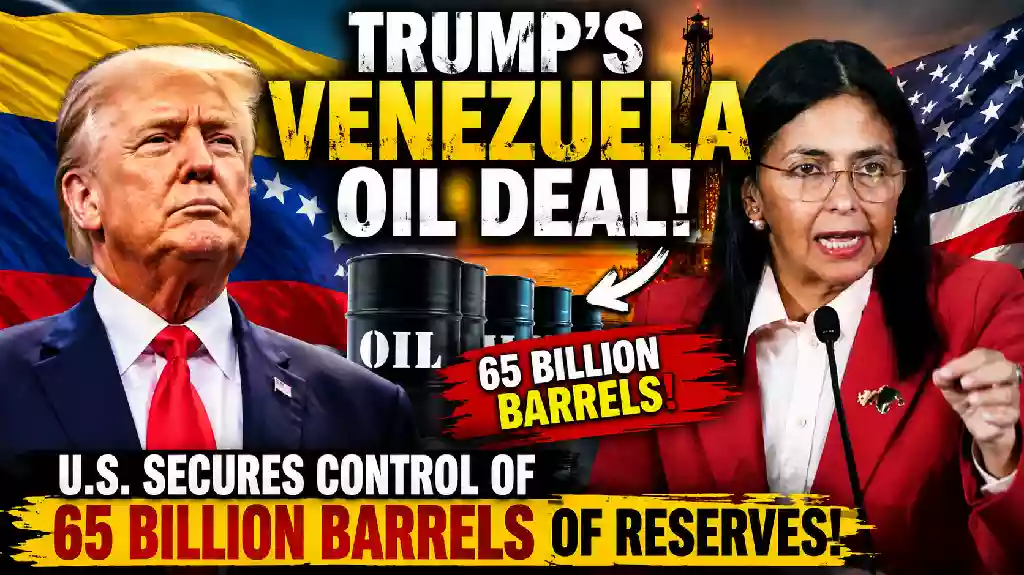
Trump’s Venezuela oil deal puts 65 billion barrels of oil reserves at the center of a major U.S. energy strategy. What could the agreement mean for American energy security, oil production and gas prices?
Trump’s Venezuela Oil Deal Puts 65 Billion Barrels at the Heart of US Energy Strategy
Trump’s Venezuela Oil Deal: 65 Billion Barrels US Energy Security and What Comes Next
A sweeping new energy agreement between the United States and Venezuela is putting more than 65 billion barrels of Venezuelan oil reserves at the center of President Donald Trump’s energy and foreign policy agenda.
The agreement, described by Trump as a historic oil deal, is designed to revive Venezuela’s struggling petroleum industry while giving U.S. interests a major role in the development and purchase of Venezuelan crude. Venezuela’s interim President Delcy Rodríguez has said the agreement will remain in place for 25 years and initially focuses on developing 17 strategic oil fields.
The source material behind the story similarly describes the agreement as giving the United States majority control involving more than 65 billion barrels and presents the deal as a potential major victory for American energy security.
A Massive Venezuelan Oil Opportunity
Venezuela possesses the world’s largest proven oil reserves, but years of underinvestment, economic turmoil and deteriorating infrastructure have prevented the country from producing anywhere near its potential.
The new agreement seeks to change that.
According to Venezuelan officials, the initial plan calls for production from 17 strategic oil fields to reach more than 1.5 million barrels per day. The broader objective is to attract American investment, technology and expertise to rebuild Venezuela’s oil industry.
Trump has also said the arrangement could help replenish the United States’ Strategic Petroleum Reserve with Venezuelan crude. Reuters reported that the U.S. president announced plans to begin refilling the reserve with oil connected to the new agreement.
Why the 65 Billion Barrels Matter
The figure of 65 billion barrels is at the heart of the political and economic debate surrounding the agreement.
Supporters see access to such a vast amount of crude as an opportunity to strengthen American energy security and reduce dependence on oil supplies from countries considered hostile to U.S. interests.
Republican supporters cited in the source material argue that increased Venezuelan production could benefit the American economy, support jobs and eventually put downward pressure on gasoline prices. One Republican lawmaker described 65 billion barrels as an enormous amount of oil and argued that the agreement could deliver long-term economic benefits for the United States.
Trump has similarly promoted the agreement as a major economic and energy achievement.
Venezuela Could Receive Billions in Revenue
Venezuela also stands to gain significantly if the agreement delivers on its production targets.
Rodríguez has said the 25-year arrangement could generate approximately $209 billion in revenue for the Venezuelan state based on a benchmark oil price of $65 per barrel. The actual amount would depend on future oil prices and production levels.
For a country whose oil industry has suffered from years of decline, the potential revenue represents a major economic opportunity.
The Venezuelan government argues that foreign investment could bring new capital and technology while increasing production and creating economic benefits for the population.
Gas Prices May Not Fall Immediately
One of the biggest questions surrounding the agreement is whether Americans will actually see cheaper gasoline.
Trump has argued that greater Venezuelan oil production could eventually help lower energy prices. However, analysts have cautioned that Venezuela’s aging infrastructure means increasing production will require substantial investment and time.
Current reporting indicates that a major increase in Venezuelan production is unlikely to happen immediately.
That means drivers should not necessarily expect an immediate drop in gasoline prices simply because the agreement has been announced.
The long-term impact could be more significant if Venezuela successfully restores production capacity and begins supplying substantially more crude to global markets.
Supporters Call It an Energy and Geopolitical Win
The deal is being promoted by supporters as more than an oil agreement.
The source material portrays it as a potential turning point in U.S.-Venezuela relations and a move toward greater economic cooperation. Supporters also argue that closer ties between Washington and Caracas could reduce China’s influence in Venezuela and strengthen U.S. strategic interests in the Western Hemisphere.
From that perspective, Venezuela’s enormous oil reserves become both an economic asset and a geopolitical tool.
Critics Question U.S. Influence
The agreement has also triggered sharp criticism.
Democratic opponents cited in the source have questioned whether the arrangement gives Washington excessive influence over Venezuela’s natural resources. Some have raised concerns about sovereignty and described the deal as potentially resembling imperialism. They also argue that the full details of the agreement need to be examined before its consequences can be determined.
Those concerns are particularly important because the publicly available details of the agreement are still developing.
Venezuelan officials, meanwhile, have emphasized that the country retains sovereignty over its natural resources despite the expanded role of foreign investment.
What Happens Next?
The real test of the Trump Venezuela oil deal will be implementation.
The agreement has ambitious goals: rebuilding Venezuela’s oil infrastructure, increasing production, generating billions of dollars in revenue and potentially supplying more crude to U.S. strategic reserves.
But achieving those goals could take years.
For Trump, the deal represents a major opportunity to pursue greater U.S. energy security while expanding American influence in the Western Hemisphere. For Venezuela, it could provide desperately needed investment and a path toward rebuilding its oil industry.
With 65 billion barrels of reserves at the center of the agreement, the Venezuela oil deal could become one of the most consequential energy partnerships of the Trump administration.
#Trump #Venezuela #VenezuelaOil #OilDeal #OilReserves #EnergySecurity #AmericanEnergy #DonaldTrump #DelcyRodriguez #GasPrices #OilIndustry #StrategicPetroleumReserve